

Krusevac is an urban settlement located in the valley of Western Pomoravlje, on the Rasina River, within the Rasina District. It serves as the economic, administrative, cultural, healthcare, educational, informational, and sports center of the district. The City of Krusevac encompasses 101 settlements and covers an area of 854 km². Historically, Krusevac was the medieval capital of Serbia.
Geography
Krusevac is located in the Krusevac Basin, which encompasses the composite valley of the Western Morava River. The basin stretches between the regions of Levac and Temnic to the north, Zupa, Kopaonik, and Jastrebac to the south, and the Kraljevo Basin and the Ibar Valley to the west.The city lies at an elevation of 137 meters above sea level, at coordinates 43° 34′ 60″ North and 21° 19′ 36″ East.
History
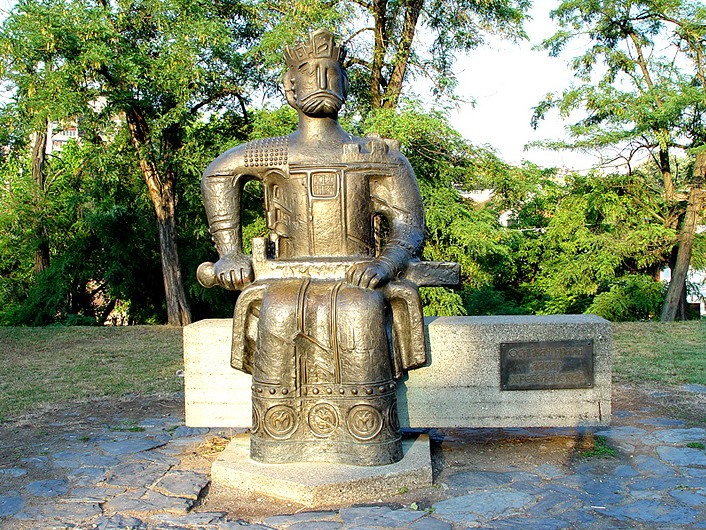
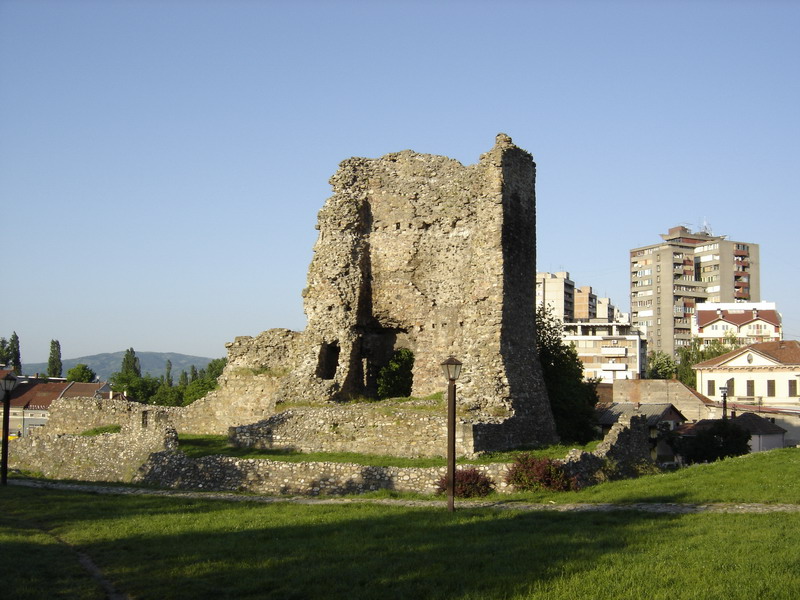
Krusevac was established as his capital by Prince Lazar in 1371. It was first mentioned in historical records in 1387, in a charter by which Prince Lazar, from his fortified capital, confirmed earlier trading privileges to the people of Dubrovnik. The city soon became an economic and cultural center of Serbia — a place of leadership and initiative in the organization of the medieval Serbian state.According to legend, Krusevac got its name from krusac, a round river stone that was largely used in the construction of the city.
After the Battle of Kosovo, Krusevac became the capital of vassal Serbia, ruled first by Princess Milica and later by her and Lazar’s son, Despot Stefan. He eventually moved the capital to Belgrade.
The Ottomans attacked Krusevac several times and finally captured it in 1427, after the death of Despot Stefan. From 1444, the city was under the rule of Despot Djuradj Brankovic, but the Ottomans conquered it definitively in 1454. During that time, the city was known by its Turkish name Aladža Hisar (“The Colorful City”).
During the Great Turkish War (known locally as the Great Siege of Vienna War), Krusevac was liberated from Ottoman rule in 1689. This happened two more times in the 18th century: from 1737 to 1739, and again during Koca’s Uprising in 1789. The city was returned to the Ottomans in 1791 by the Treaty of Sistova. Krusevac was finally liberated from Ottoman rule in 1833. After the liberation, the city began to grow rapidly and became one of the major regional centers of Serbia at the time.
The first pharmacy in Kruševac—and the third in Serbia—was opened in 1868 by Dragoslav Kedrovic (1839–1907).
In 2013, five medieval fountains in Krusevac were restored.
During World War II, German occupying forces executed 1,642 patriots from Krusevac and the surrounding area on Bagdala Hill.
After the war, the site was transformed into a memorial park named Slobodiste.
Economy
Kruševac is a strong economic center, particularly known for its metal-processing industry (“14. Oktobar”) and chemical industry (HI Zupa, Henkel-Merima, Trayal). The city is also home to Rubin, a renowned producer of alcoholic and non-alcoholic beverages, as well as FAM, producer of lubricating greases.
In addition to major industrial companies, Kruševac boasts over 1,200 private enterprises and more than 2,500 small businesses and shops operating in various fields.
City Festivities and Celebrations
In Slavic folk mythology, Saint Vitus (Sveti Vid) represents the supreme, all-seeing deity. In Serbian tradition, Vidovdan (St. Vitus Day) is marked as the day of the Battle of Kosovo in 1389. Since 1892, the Serbian Orthodox Church has officially recognized Vidovdan as a religious holiday, following the Prophet Amos and Saint Prince Lazar.
The most important holiday in Krusevac is undoubtedly Vidovdan, deeply rooted in the local consciousness as the day Prince Lazar fell in battle defending his state and people. It is celebrated with all the elements of a city patron feast, much like Pentecost (Whitsunday) or Holy Trinity Day.
Each year on Vidovdan, a memorial service is held in the Lazarica Church, honoring not only the fallen of Kosovo but all Serbian soldiers who gave their lives in liberation wars. In the past, a large fair was also held on this day—the biggest in Krusevac.
Fairs or open-air markets, once a key part of trade, were introduced across Serbia, including Krusevac, by a government decree in 1839. In addition to the Vidovdan fair, others were held on Annunciation Day (April 7), St. Elijah’s Day (August 2), and Little Nativity of the Virgin (September 21)—a tradition that continues to this day. Guild feasts, once a vital part of urban civic life, saw various trade guilds and societies- mainly humanitarian- celebrate their patron saints. Some of the earliest guilds in Krusevac included the potters’ guild (1839), the tallow chandlers’ guild (1842), the grocers’ guild (1846), and the tavern owners’ guild (1848).
Today, this tradition survives through a unique local association called “Dobra narav” (“Good Nature”)- also known humorously as “Grumblers, Misfits, and Cranks”—which meets every year on the ninth Tuesday after Christmas, proudly upholding its own quirky rules of conduct.
Demographics
According to the most recent census from 2011, the City of Krusevac had a population of 131,368, while the urban settlement of Krusevac had 58,745 inhabitants (compared to 57,371 in 2002 and 57,871 in 1991).
In the urban area of Krusevac, there are 46,395 adults, with an average age of 39.2 years (38.2 for men and 40.1 for women).
The settlement includes 19,342 households, with an average of 2.95 members per household. The population is predominantly ethnic Serbs, according to the 2002 census.